

Malta in "A Winter in Egypt"
Published on 13/03/2011Eugène POITOU
(excerpts)
The lights of Malta are signaled at eleven o'clock. Two hours later, we are in the Quarantine harbor. The next morning, everyone is on deck early. It is a great joy to go ashore for a few hours.
The appearance of Malta is dreary, despite the splendid sun illuminating its white rocks and white houses. Formidable fortifications raise their double and triple-tiered batteries above our heads; while opposite and to the right, on the steep slopes overlooking the sea, stretch gardens without greenery, arranged in terraces, which from below present to the eye only the arid aspect of the walls supporting them. That is all Malta is: a citadel and a chalk rock made fertile by labor. It is said that the island's soil is of marvelous fecundity, and that wheat often yields up to sixty times the seed. But this topsoil was made by man, one may say, by breaking up with the spade the crumbly rock that is everywhere just beneath the surface. It is even claimed that more than one of these Maltese, who are both farmers and sailors, has gone in his boat to fetch soil as far as Sicily. It is from there, they say, that the soil of the governor's garden was brought, which people go to see as a curiosity a league from the town.
A multitude of boats surround our steamer, to take passengers ashore. The boatmen shout, provoke one another, and quarrel with all the vivacity of southerners, in that dialect both rough and sonorous, which is like a blend of the languages of Europe and Africa, guttural like Arabic, picturesque like Italian. The Maltese race shares, as well as their language, this dual character: noisy like the Neapolitans, they are energetic like the Arabs, industrious like the Jews. All along the Mediterranean coast, and mainly in the Levant, this active and enterprising population is spread. It is as if from their island, too narrow to contain them, they overflow onto all the neighboring shores. They are merchants, servants, dragomans, cooks: all trades suit them, and they are suited to all trades. More intelligent than scrupulous, superstitious and cunning, thievish, quarrelsome and loquacious, they readily have an insult on their lips and a knife in their hand.

Although new and regularly built, the Cité-Valette has a rather original character. Its wide streets, drawn straight as a line and intersecting at right angles, descend toward the sea by steep slopes often arranged as staircases. It is known that it was rebuilt by the Grand Master who gave it his name, after the famous siege sustained in 1565 by seven hundred knights and eight thousand Maltese against forty thousand Turks. The architecture of the houses is unremarkable; but already terraces replace rooftops, as in the Orient. What has an even more oriental character are the balconies enclosed with glass and shutters.
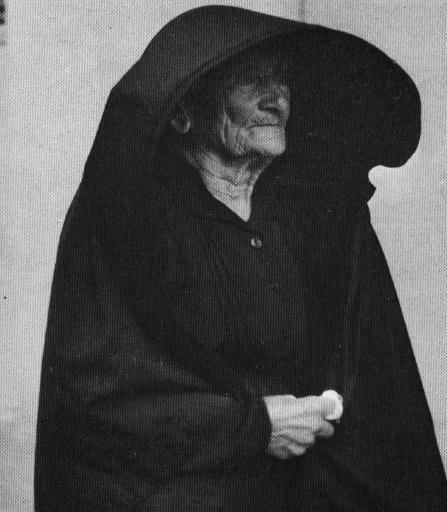 The women have a bizarre headdress: over their heads they throw, in the manner of a hood, a sort of black silk mantle called faldetta. This garment is not in itself elegant; but the Maltese women wear it with an ease that is not without grace, and beneath the folds of this long veil, their striking features, their black hair and their bright eyes shine with great brilliance.
Although we are in December, the heat is strong. It seems as though one is already under the African sky. The English officers stroll about in white jackets. What sun must beat down, in June, upon the flagstones of these wide streets! The old towns of the South and of the Orient, built over centuries, do not have this regularity that so pleases us Northerners; but in return, they are marvelously suited to the climate: narrow and winding streets, tall houses prevent the sun from burning the heads of passers-by. One immediately recognizes here the modern city built in a day.
The only monuments in Malta are the Palace of the Grand Masters, which offers nothing remarkable, and the Church of Saint-Jean, which is one of the most curious in the world. In terms of architecture, detail, and ornamentation, it displays all the bad taste of Italian churches of the last three centuries. But what is truly magnificent is the floor of the church, formed entirely of the sepulchral stones of the knights of the Order. There are no fewer than four hundred tombs, arranged side by side: each is covered with a mosaic of colored stones, inlaid in marble, representing the coats of arms, emblems, and mottoes of the deceased. This paving is of extreme richness and beauty: even Florence has nothing finer. There are no more heroic memories in modern history than those of these Hospitallers, the last soldiers of the faith in the Orient, defending its conquests foot by foot for five centuries, slowly retreating from Jerusalem to Acre, from Acre to Rhodes, from Rhodes to Malta, and there, lost sentinels of too-forgetful Christendom, resisting with invincible courage the repeated assaults of the Crescent. France may pride herself on claiming as her own a third of the names inscribed on the tombs of Saint-Jean, and among these names are those of the Grand Masters who most glorified the Order and sustained its fiercest battles.
If the Order of Malta, by ceasing to fight, had degenerated, one may at least regret that its heritage did not fall into more generous hands. It is known that Malta was occupied in June 1798 by General Bonaparte, on his way to Egypt. His audacity, his already great prestige, aided by some contacts within the fortress, opened without a fight a citadel reputed to be impregnable; which prompted the witty Caffarelli to say: "We are very fortunate that there was someone inside the fortress to open its gates for us."
Retaken by the English in 1800 from a garrison reduced by famine, Malta was to be returned by them, under the terms of the Treaty of Amiens, to the Order of Saint-Jean de Jérusalem. But England, in spite of the treaty, kept a prize she deemed precious.
Situated halfway between Europe on one side and Asia and Africa on the other, equipped with admirable harbors large enough to hold two or three fleets, surrounded by fortifications that defy all attacks, Malta is at once a station for merchant vessels, a depot on the route to India, an arsenal, a refuge, and a base for warships. One understands that England holds it dear. Mistress of the ports of the Mediterranean through Gibraltar, she watches over its center from the heights of her fortress of Malta. But one cannot help smiling when reading, on the Place d'Armes in Malta, this pompous inscription displaying all of English pride:
MAGNAE ET INVICTAE BRITANNIAE
MELITENSIUM AMOR
ET EUROPAE VOX
HAS INSULAS CONFIRMANT.
A.D. 1814.
"To great and unconquered Britain, the love of the Maltese and the voice of Europe have confirmed the possession of these islands"
Note 1: The work "A Winter in Egypt, 1881" by Eugène POITOU is in the public domain.
It can be consulted in its entirety at: http://www.mediterranees.net/voyageurs/poitou/sommaire.html
Note 2: Google Images
- Economic life in Malta in the 18th century, Aurore Verié
- Foreigners in Malta (late sixteenth and seventeenth centuries), Anne Brogini
- The Maltese language, a linguistic crossroads, Martine VANHOVE
- The Jews in Malta, Aurore Verié
- The French in Algeria from 1830 to today (excerpts), Jeannine VERDES-LEROUX
- The emigration of Maltese in Algeria in the nineteenth century, Marc DONATO
- Malta in "A Winter in Egypt" (excerpts), Eugène Poitou
- The Maltese in Tunisia before the Protectorate (excerpts), Andrea L. SMITH
- The population of Malta in the seventeenth century, a reflection of modernity (excerpts), Anne Brogini
- The fear of the French Revolution in Malta, Frans CIAPPARA
- The Siege of Malta by Napoleon Bonaparte (excerpts)
- Malte, frontière de chrétienté (1530-1670), de Anne BROGINI
- L'esclavage au quotidien à Malte au xvie siècle, de Anne BROGINI
- Noblesse maltaise et généalogie, de Loïck PORTELLI
- Some Disreputable Maltese, by Loïck PORTELLI