

The Maltese in Tunisia before the Protectorate
Published on 16/03/2011by Andrea L. SMITH
reviewed by Jean F. BUHAGIAR
Emigration to Tunisia
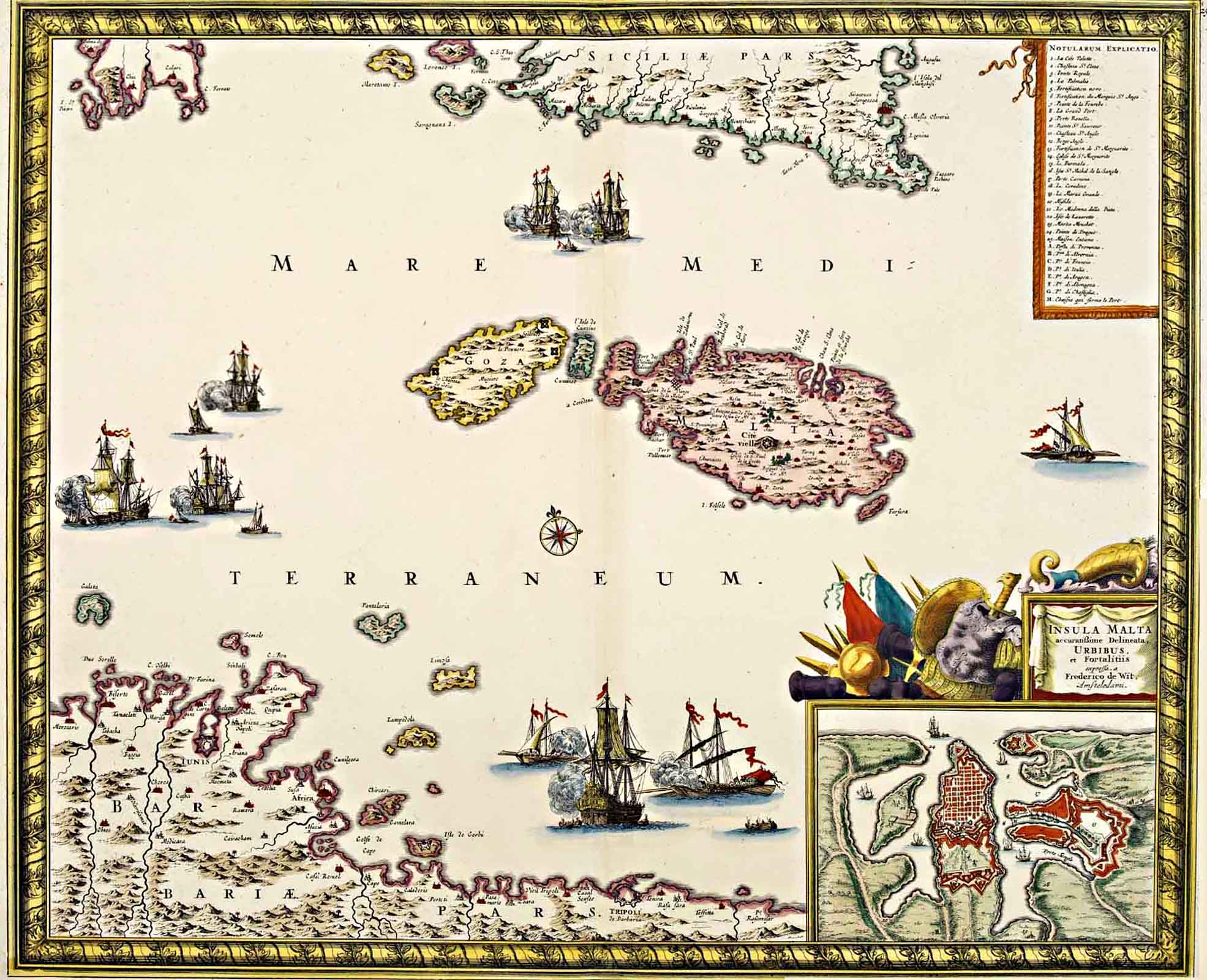
Maltese emigration at the beginning of the 19th century was driven by a series of epidemics, economic shocks, and problems related to high population density exacerbated by a notable lack of natural resources. One to two thousand Maltese left each year between 1818 and 1832. They chose mainly the eastern and southern shores of the Mediterranean. Already in the 1840s, 20,000 Maltese lived in Algeria, Tunisia, Egypt, Constantinople, Greece, or Tripoli. Approximately 15% of the Maltese population lived overseas at that time. This migration was characterized by a high degree of spontaneity and mobility. Migrants would leave for a Tunisian city, for example, then head to Algeria or Egypt. There was also a very high rate of return to the homeland: roughly 85% of emigrants from the 1840s to 1890s returned to Malta.
The figures for the European population in 19th-century Tunisia show the volume of immigration from Europe, but are not very accurate. Contemporary witnesses give us various figures. After analyzing these sources and the Catholic registers of Ste. Croix, M. Ganiage estimated that in the mid-19th century, there were 6 to 7,000 Maltese in Tunisia who comprised 60% of the European population. There were also 4,000 Italians and some 250 Greeks during the period 1850–1860. In the coastal cities, the Maltese were by far the majority. In Sfax, for example, they represented 77% of the Catholic population between 1841 and 1879, and there were 900 of them in 1885 out of a total of 1,200 Catholics (Soumille 1993).
The Image of the Maltese from Travel Accounts
The image of the Maltese found in the accounts of contemporary European travelers is rather negative. Pellissier describes "a mass" of Maltese who "engage in various lame industries, smuggling above all." This growing population of European immigrants needed housing, and it was in the city of Tunis where the lack of accommodation was most acute that the living standards of poor Europeans most shocked contemporary writers. The Maltese quarters were described as among the least well-maintained in the city. Dunant wrote in 1858: there are, for families of poor workers, fondouks, whose inhabitants are for the most part Maltese. These people are crammed together, 50 to 60 families with their children, living pell-mell during the day, among dirty and unkempt women.
Because the European quarter was situated at the bottom of the Medina, it was reputed to be muddy and unpleasant during winter. At that time, the streets of Tunis were not yet paved and became impassable. A witness in 1868 described the Maltese quarter in Tunis as follows: "the main street of Tunis known as 'the Maltese street' is kept in a state of revolting filth. The most foul refuse remains there constantly." Influenced by these rather vivid images, the historian M. Ganiage also gives us a somber picture, describing the Maltese as a "wretched proletariat" with a very low level of education.
These sources suggest that people from northern Europe traveling in Tunisia found the Maltese rather difficult to understand or define. They often described them as a sort of mixture, displaying a mixed culture and serving as a bridge between the West and the East. Even if this was true for some at that time, our knowledge of the daily life of this segment of Tunisia's population remains limited. On the other hand (and fortunately!), the correspondence of the British Consul in Tunisia provides us with new insights that take us beyond these stereotypical images. These sources advance our knowledge of the Maltese and thus of the history of the "Tunisian mosaic" on the eve of the Protectorate.
A Revised Image of the Maltese and Their "Golden Years," 1855 - 1870
The information drawn from the archives of British consular agents during the last decades before the Protectorate presents a relatively new image of the Maltese in Tunisia. At that time, they numerically dominated the European population and enjoyed a certain freedom, establishing considerable Maltese colonies throughout the Regency. One could already notice a significant second-generation Maltese population born in Tunisia. It was also during this period that the Maltese were supported by an important figure among the British consular staff: Consul General Richard Wood. Wood's tireless efforts to help the poorest of his nationals were remarkable, followed in this task by his consular staff throughout his tenure in Tunis.
The characterization of the Maltese by European observers as an intermediate population was surely based in part on their Semitic language, similar to the spoken language of the Tunisians. Now, this ability to communicate with the local population had granted them great advantages. They were able to establish international trade networks from the time of their arrival, including a significant and quite active smuggling trade. There were clear advantages to this ambiguous social position. The documents from this period take us beyond the rather gloomy portraits of shoeless Maltese children and their disheveled mothers. They describe instead a people who were mostly poor, but very hardworking and resourceful, quite comfortable in their new country.
The Records of the British Consular Court
Honest and hardworking was the vast majority of the Maltese in Tunisia at that time, but the archives provide only a few details about this segment of the population. Those who were educated disappeared without having had time to leave in the archives any writings or personal record of their memory. Therefore, only those who found themselves in difficulty appear in these documents: farmers unable to pay their taxes, the poorest who received assistance for return to Malta, victims, or perpetrators of crimes.
In the absence of more "neutral" sources, it is useful to consult these documents concerning Maltese people in trouble with the various authorities. The records of the British Consular Court based in Tunis provide information on crimes committed as well as on the individuals concerned and daily Maltese life. All cases handled by consular officials toward the end of the 1870s were examined in detail from 1875 to 1877. The individuals summoned were almost always Maltese. Rare cases involved British subjects from Gibraltar or Greece. These records identify the occupations of offenders and provide a very detailed description of Maltese activities in Tunis before the Protectorate.
The Occupations of the Maltese
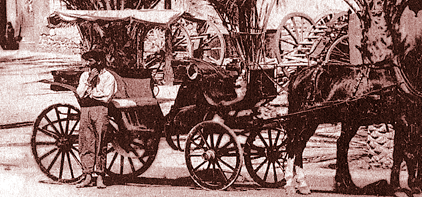
We do not have much information on the occupations practiced by the Maltese under the Regency at that time. According to M. Ganiage, the Maltese in Tunis were mainly coachmen and those in coastal cities engaged in smuggling oil, cotton, or weapons. In his survey of professions in the parish registers of Ste Croix between 1845 and 1864, the occupations of the Maltese were rarely noted. Only 67 cases are mentioned: 16 carpenters, 5 blacksmiths, 11 merchants, 4 tavern waiters or keepers, and 2 carters.
Criminal records provide us with further details on the occupations practiced by the Maltese. These sources indicate the occupation of every individual summoned by the consular court. From 1875 to 1877, the following were found:
- Carriage drivers: 25
- Small traders: 21
- Farmers and day laborers: 20
- Street vendors (itinerant sellers of fish, fruit, rag collectors, and musicians): 18
- Artisans: 15
- Waiters or keepers of bars and taverns: 12
- Those whose occupation is not indicated: 13
- Vagrants: 4
The most common occupation among Maltese defendants was that of driver, the statistics confirming the observations of the time. But the great majority of Maltese artisans is not always mentioned. M. Ganiage mainly noted carpenters and blacksmiths. Here, the occupations listed are more diverse and also include cart builders, coopers, masons, painters, and saddlers. The number of small traders is also relatively surprising. This category includes the following occupations: barber (1), baker (1), butcher (2), confectioner (1), merchants (5), tailor (2), cobbler (1), miller (2), unspecified traders (7).
 Some Maltese were waiters or owners of bars or taverns. This information is confirmed by other sources which attest that a large number of these establishments were run by Maltese. Already in 1852, 59 were recorded in Tunis and La Goulette.
Among the offenders, thirteen had no identified occupation. These were almost all young offenders, often accused of "rowdy behavior" by the local police or for having insulted others while intoxicated. This figure also includes three women accused by other Maltese women. Despite the rather dramatic descriptions of Maltese quarters from the mid-century, it is interesting to note the small number of defendants identified as unemployed or vagrants. Moreover, it should be remembered that these data concern only Maltese accused of various crimes.
This gives us the impression of a largely employed population, who for the most part participated in respectable enterprises of the local economy, and allows us to deduce that the majority were integrated into the economic life of the country.
The Maltese and Other Nationalities
This new documentation also gives us important details about relations between the Maltese and the Tunisians.
They associated with each other or often worked together. They shared goat herds, walked through the fields with Tunisian carter companions after work, or fished in the same spots. The Maltese felt so at ease that they traveled to remote regions, were often in the medina of Tunis after nightfall, or played music at night. This is not the behavior of very anxious people.
These sources show us that the Maltese occupied a rather intermediate social and economic position during this period. The classic example is that of Maltese smugglers, capable of serving as a bridge between the West and the East. A certain skill was necessary to succeed in this field, as they had to participate in exchange networks with other partners in Tunisia, Malta, or Algeria. The Tunisians brought them oils, hides, and other goods that the Maltese sold to Maltese or European merchants in Malta. Tunisian merchants were also indispensable to them for purchasing contraband products coming from Europe, such as tobacco supplied by European traders.


This intermediate status seems to have been largely favorable to the Maltese in Tunisia before the Protectorate. They had strong relationships with Catholic priests or their British consular representatives. They were also able to communicate with the local population and were therefore quite well accepted by the Tunisians. Vadala wrote in 1911 that despite the fact that the Maltese captured in the 18th century were hated by Muslims because they were good Christians, when piracy was abolished, the latter were quick to "consider them as half-brothers and to use them as intermediaries with the peoples of Europe." For him, the role of the Maltese as pioneers and first traders in North Africa "has not been sufficiently recognized and it is time to do them justice."
- Gallica – Dépêche Tunisienne: http://gallica.bnf.fr/searchInPeriodique?spe=&arkPress=cb32756164v/date
- Coachman image: Sfax website: http://www.sfax1881-1956.com/
- Malta-Sicily map by de Wit (1670-1680)
Published with the kind permission of Professor Maurice CAUCHI, manager of the website "Malta Virtual Emigration Museum"
- Economic life in Malta in the 18th century, Aurore Verié
- Foreigners in Malta (late sixteenth and seventeenth centuries), Anne Brogini
- The Maltese language, a linguistic crossroads, Martine VANHOVE
- The Jews in Malta, Aurore Verié
- The French in Algeria from 1830 to today (excerpts), Jeannine VERDES-LEROUX
- The emigration of Maltese in Algeria in the nineteenth century, Marc DONATO
- Malta in "A Winter in Egypt" (excerpts), Eugène Poitou
- The Maltese in Tunisia before the Protectorate (excerpts), Andrea L. SMITH
- The population of Malta in the seventeenth century, a reflection of modernity (excerpts), Anne Brogini
- The fear of the French Revolution in Malta, Frans CIAPPARA
- The Siege of Malta by Napoleon Bonaparte (excerpts)
- Malta, frontier of Christendom (1530-1670), by Anne BROGINI
- Everyday slavery in Malta in the 16th century, by Anne BROGINI
- Maltese nobility and genealogy, by Loïck PORTELLI
- Some Disreputable Maltese, by Loïck PORTELLI